Acuario Pets
Expert care guides for exotic aquatic pets, reptiles, amphibians, and aquascaping. The highest-traffic site in my portfolio, built through deep topical authority and strategic content planning.
Visit acuariopets.com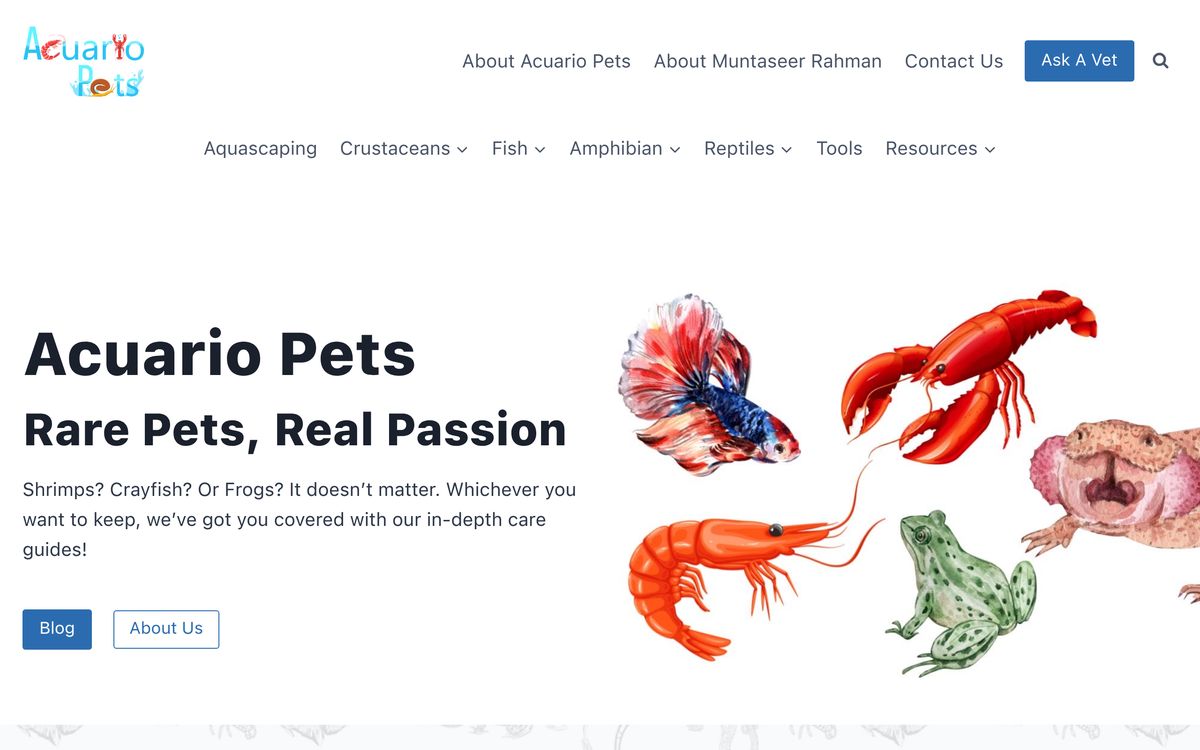
The Opportunity
After the success of The Turtle Hub, I saw a clear opportunity to expand into the broader exotic pet space. Turtles are just one segment of a much larger market — aquarium fish, axolotls, bearded dragons, hermit crabs, frogs, and aquascaping all have passionate communities searching for care information.
The key insight was that most existing content in this space was either surface-level (generic pet sites covering everything from dogs to fish in 300-word articles) or hyper-specific (forum posts buried in thread discussions). There was room for a comprehensive, well-organized resource that went deep on each species.
Content Strategy
Acuario Pets follows a topical cluster model. Each pet category (aquarium fish, reptiles, amphibians, aquascaping) has a pillar page that links to dozens of detailed sub-articles. This structure signals to Google that the site covers the topic comprehensively.
Content categories include:
- Species care guides: Detailed profiles covering diet, habitat, temperature, tank mates, lifespan, and common health issues. These are the workhorses — they target high-intent search queries from people who already own or are researching a specific pet.
- Product reviews and comparisons: Tank filters, heaters, lighting, substrates — the gear that pet owners need. These articles monetize through affiliate links and solve real purchase decisions.
- How-to guides: Setting up a new tank, cycling water, treating common diseases. Practical, actionable content that earns bookmarks and return visits.
- Aquascaping tutorials: A growing segment covering planted tank design, CO2 systems, and hardscaping. This niche has strong visual appeal and high engagement.
What Makes It Work
Lowest bounce rate in the portfolio (69%). This is the metric I'm most proud of. In a niche where most content sites see 80%+ bounce rates, keeping nearly a third of visitors browsing to additional pages means the content and internal linking are working.
Strong average time on site (3:19). People aren't skimming — they're reading full care guides. This suggests the content depth matches what visitors are looking for.
Diverse traffic sources. While Google organic is the primary driver, Acuario Pets gets meaningful traffic from Pinterest (pet care pins), direct visits (bookmarks from returning owners), and referral links from forums and social media.
Tech Stack
WordPress was the right choice for this site. The content management needs are straightforward (publish articles, manage categories, handle media), and WordPress handles that better than any custom solution could. WP Rocket handles caching and performance optimization. Cloudflare provides CDN and DDoS protection.
Challenges
Content quality at scale. With 100+ articles, maintaining consistent quality requires clear editorial standards. Every article follows a template: species overview, care requirements (detailed), common mistakes, FAQ section. This template ensures nothing important gets missed.
Google algorithm volatility. Pet care content is considered YMYL (Your Money or Your Life) by Google because bad advice could harm an animal. This means E-E-A-T signals matter more — the content needs to cite veterinary sources and demonstrate expertise.
Seasonal traffic patterns. Pet interest spikes around holidays (people gifting pets) and summer (new pet owners). Traffic dips in winter. Planning content around these patterns helps smooth out revenue.
Results & Lessons
Acuario Pets is proof that the topical authority approach works. By going deep into a niche instead of spreading thin across many topics, the site earned Google's trust faster than my earlier, more scattered attempts.
The key lesson: depth beats breadth. Fifty comprehensive articles on related topics within a single niche outperform two hundred surface-level articles across multiple niches.